
Despite a ceasefire agreement between Iran and the United States, the Strait of Hormuz remains blocked due to Iran's inability to locate and remove all the mines it laid during the conflict, hindering global oil and gas supplies.

'We kept our bags packed, ready to jump into the sea. Many times, I felt it could be my last day.'

'What we have yet to see on either the US or the Iranian side is willingness to compromise on their ultimate demands and the flexibility to reach an agreement to end the war.

Iran has issued a defiant response to United States President Donald Trump's claims regarding the conclusion of hostilities, asserting that it alone will 'determine' the end of military actions against American and Israel targets.

Major General Amir Hatami, commander-in-chief of the Iranian Army, condemned the attack on the vessel, one of the country's newest warships, which occurred while it was returning from a military exercise.

External Affairs Minister S Jaishankar addresses the Indian Ocean Conference, expressing deep concern over the West Asia conflict and its economic repercussions on energy, trade, and food security. India calls for a swift return to peace and opposes targeting civilians and infrastructure.

China and Pakistan have jointly proposed a five-point peace plan to address the ongoing conflict in West Asia, focusing on de-escalation and safe passage through the Strait of Hormuz.

...reopen for up to six months. Until then, the Strait stays nearly closed. The world pays. And no one, including the man who started this, can say when it ends, notes Prem Panicker in his must read blog on the Iran War.

Congress leader Shashi Tharoor is urging the Indian government to take a more proactive role in mediating the escalating conflict between the US-Israel alliance and Iran, emphasising the impact on India's energy security and regional stability.

The Americans can occupy Bab el Mandeb, claim to have 'solved' the Strait of Hormuz crisis, declare victory that President Trump so desperately needs, points out Colonel Anil A Athale, former head of the history division, ministry of defence.
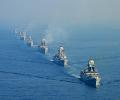
According to sources, the Indian Navy warships are on standby to provide assistance or help required by merchant vessels.

United States President Donald Trump has welcomed the declaration from Tehran regarding the restoration of maritime access through the Strait of Hormuz.
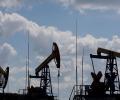
Global energy markets saw a significant correction as oil prices nosedived following Iran's announcement that the Strait of Hormuz has been fully reopened, dismantling the 'war-risk' premium that had gripped the market.

Amid escalating tensions, Iranian Deputy Foreign Minister Saeed Khatibzadeh declares Iran's unwavering commitment to a 'heroic nationalist defence' against perceived American and Israeli aggression, vowing to resist what he calls an 'invasion' to the very end.

Former Central Command chief David H Petraeus suggests the US and Iran are likely to extend their ceasefire beyond the initial two-week period, citing willingness from both sides to continue negotiations.

Is the current rally telegraphing a durable peace plan in West Asia, boosted by United States (US) President Donald Trump's incoherent and contradictory posts on social media?

The United States has extended a waiver from sanctions to allow countries to buy petroleum products from Russia by a month, days after it ruled out renewal of the special measure.

Donald Trump has warned Iran to open the Strait of Hormuz within 48 hours or face military action, escalating tensions amid regional conflict and impacting global oil supplies.

Government sources indicate a potential increase in petrol and diesel prices due to rising global crude oil costs and losses incurred from a prolonged freeze on retail rates.

An Indian-flagged LPG vessel successfully transited the Strait of Hormuz, reducing the number of Indian ships stranded in the Persian Gulf. India is in talks with Iran to ensure safe passage for its tankers, and Indian refiners continue to purchase crude oil and LPG from Iran despite regional tensions.

Trump said that the strait will be "open very soon" if ongoing negotiations with Tehran continue successfully.

Israel's Defence Minister Israel Katz has stated that Israel is prepared to escalate military action against Iran, pending approval from the United States. This comes as US President Donald Trump says he would not use nuclear weapons in any conflict with Iran, while also claiming the US has 'total control' over the Strait of Hormuz.

Bessent indicated that the U.S. is evaluating the status of Iranian oil as the current campaign progresses.

Pakistan's Foreign Minister Ishaq Dar met with his counterparts from Egypt and Turkiye in Islamabad ahead of a quadrilateral summit, including Saudi Arabia, to discuss the ongoing conflict in West Asia and explore avenues for peace.

On Saturday, it was reported that a drone strike had targeted the Fujairah Port in the UAE, triggering a fire.

The diplomatic intervention follows various media reports which attributed comments to Iranian lawmaker Alaeddin Boroujerdi, suggesting that merchant vessels were being charged USD 2 million for safe passage through the "conflict-hit Hormuz."

The ceasefire is still technically holding, to the extent that no overt hostilities have been reported yet, but the rhetoric has hardened dangerously. The week ahead will also clarify whether the Islamabad failure was a negotiating tactic or whether Washington has genuinely locked itself into a position from which the only exits are climb-down, escalation, or the slow bleed of a new status quo that nobody chose and nobody controls. Prem Panicker continues his must read blog on the Iran War.

The chairman of maritime company Safesea Group has described the attack on the US-owned crude oil tanker Safesea Vishnu, which resulted in the death of an Indian crew member, as "deliberate and calculated". He emphasised the need for governments to ensure the safety of commercial shipping lanes and seafarers.
Equipped with advanced weaponry, the HMS Anson is fitted with "Tomahawk Block IV land-attack missiles" with a range of 1,600 km and "Spearfish heavyweight torpedoes," providing formidable offensive capabilities.

The Indian rupee depreciated by 34 paise to close at 93.78 against the US dollar, marking its third consecutive session of decline. This fall is attributed to escalating crude oil prices driven by uncertainty surrounding US-Iran peace talks and fresh attacks in the Strait of Hormuz, alongside significant foreign institutional investor outflows from domestic equity markets.
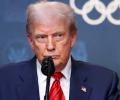
Each time a deadline almost runs out, President Trump hands out a new one.

The core issues to be settled -- access to Hormuz, Israel's aggression in Lebanon, the question of Iran's nuclear programme, sanctions relief and compensation -- are thorny enough to require weeks of patient negotiation. The most likely outcome of the opening sessions is that both sides take the measure of each other, establish what is and is not negotiable, and return home without having broken anything. That would count as progress.

Both sides have now revealed a preference for escalation over strategic defeat, and each new provocation narrows the space for the next pause. The Touska seizure, Iran's refusal to negotiate under blockade, Israel's strikes on Iranian oil infrastructure -- all of these add up to an increasingly untenable situation. This makes the wild card -- Trump and his motormouth -- more consequential than ever, notes Prem Panicker in his must read blog on the Iran War.

The US Embassy acknowledged the attack in a post on X, urging Americans to avoid the facility 'until further notice' and announcing that all appointments had been cancelled.

Far from it; the country's resistance to the US, its nuclear ambitions, and its pursuit of influence and proxies across the Middle East are driven by a constant search for independence and security. Thus, Iran will never capitulate. Trump will learn this home truth ultimately, and it is going to be a humbling personal experience that may even destroy his presidency, predicts Ambassador M K Bhadrakumar.
Tensions escalated dramatically on March 5, 2026, as the United States and Israel launched coordinated strikes on Iran, triggering retaliatory explosions across Tehran, Sanandaj, and beyond.
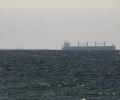
The UK Maritime Trade Operations issued a warning noting that the incident took place approximately 15 nautical miles north of Sharjah.

Israel wishes to continue its bombing campaign until Iran's military and industrial infrastructure are degraded to a point where it ceases to pose a threat to Israel. Iran, for its part, has learnt from its experience in the 12-day war of last June. Any ceasefire, it believes, will only be a prelude to another attack on itself. It is determined to convey that any attack on Iran will impose heavy costs on Israel, the US, America's allies in the Gulf -- and on the world at large, points out T T Ram Mohan.
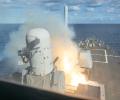
In a coordinated military operation, the United States and Israel launched airstrikes against Iran, escalating tensions amid stalled nuclear talks and claims of resumed nuclear activities, resulting in the death of Iran's supreme leader.

US President Donald Trump warned that the United States is prepared to launch a military strike on Iran if peace negotiations in Islamabad fail, while Vice President JD Vance departed for talks in Pakistan.
